In this reflection from a hammam in Istanbul, Raul explores radical transparency as a community-building practice. Moving from institutional accountability to relational accountability, the article reflects on trust, vulnerability, New Power, feedback, and the kind of openness that can only grow inside relationships of care and consent.


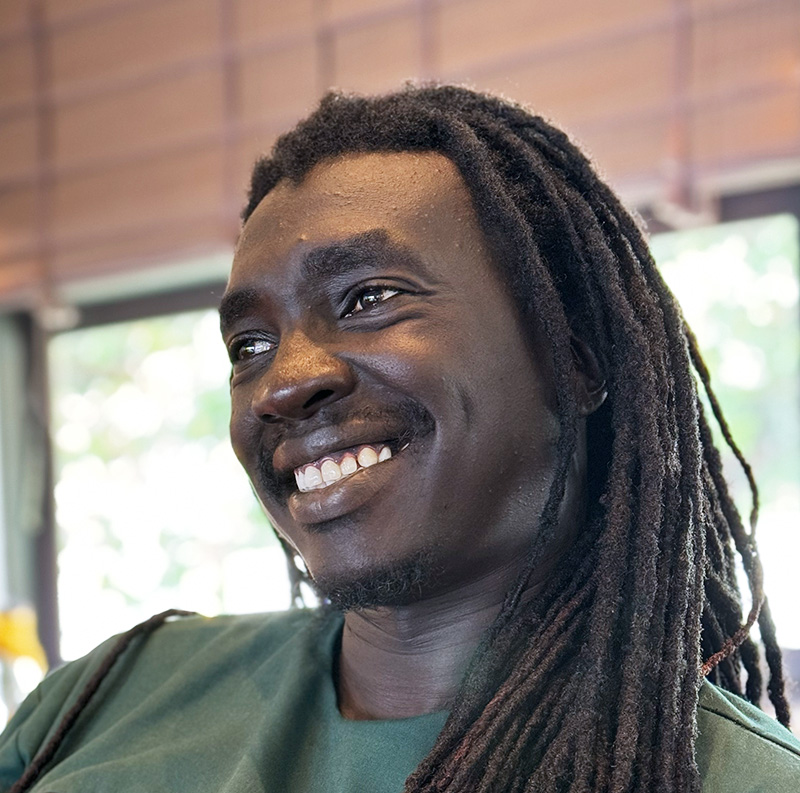
I want to start with something that maybe sounds a little strange: I learned one of my most important lessons about transparency in a Turkish bath. Not in a conference, not reading a book, not in a workshop. In a hammam in Istanbul, in 2023, sitting on warm marble with Dzikamai Bere and other colleagues from Reimagine Peacebuilding — the women in their own hammam nearby, probably having a much better time than us — something shifted inside me that I am still trying to understand.
I think what happened is that the heat makes it harder to pretend. You can't really be formal when you're sitting on a stone and almost naked in the steam with people from different countries. And in that space, DB (that's how we call Dzikamai)started talking about something that sounds very simple but actually has a lot of depth: we are all open with some people about some things, and closed with other people about other things. That's it. That's the whole thing. But some how, hearing it there, in that context, it felt like someone just described something I had always felt but never had the words for.
This reflection is my attempt to think more carefully about that idea. What I want to explore is whatI understand as radical transparency — not transparency as exposure, not as an institutional obligation, but as a carefully held openness inside relationships of real trust. And why I think this kind of transparency, which is more connected to the values of New Power (Heimans & Timms, 2018), is something we urgently need in our communities and organizations.
When I think about transparency in institutions — governments, NGOs, companies — what comes to my mind is reports. Annual reports, audit reports, accountability reports. All these documents that go upward, to whoever has the power to judge you. Heimans and Timms (2018) have a name for this: Old Power. It's a power that flows from top to bottom, that accumulates in few hands, and that is very suspicious of anything horizontal.
The thing is, that kind of transparency doesn't really create trust. It creates the appearance of trust. Covey and Merrill (2006) make this distinction very clearly —institutional trust and interpersonal trust are not the same thing, and you cannot replace one with the other. I have seen this happen many times in my work: an organization can have perfect financial reports and terrible internal relationships. The paperwork is clean. The people are not okay.
Brene Brown (2010)says something that I think is important here: vulnerability is the birth place of innovation, creativity and change. But in old power systems, vulnerability is punished. If you show doubt, you are weak. If you admit a mistake, you are a risk. And so people learn to look transparent without being transparent. Form without substance. The report without the conversation. I think that's one of the most exhausting things about working in traditional institutions — you spend so much energy managing perceptions instead of actually connecting.
Before I continue, I want to be clear about what radical transparency is — and what it is not. Because I think the word “radical” can scare people, or make them think this is about revealing everything about yourself to everyone at all times. That's not what I mean.
Radical transparency, as I understand it from my experience with Reimagine Peacebuilding, is the disciplined practice of creating relationships and spaces where truth can be shared — with care, with consent, with courage, and with accountability. It is an architecture that protects people while also encouraging them to be honest.It's not about forcing openness. It's about building the conditions where openness can happen naturally, because people feel safe enough.
Going back to what DB taught us: yes, we all have topics where we are open and topics where we are closed. As a teenager, maybe you talked to your parents about what happened at school, about your friendships — but you kept quiet about the parties, about the things you were still figuring out about yourself. Not because you were lying. Because trust is built over time, and openness requires a safe ground.You don't just declare it. You construct it, slowly, with the people who haveearned it.
This connects to what Lederach (2005) calls moral imagination — the capacity to build new ways of relating that go beyond cycles of distrust and closure. For me, radical transparency is exactly that: a small act of moral imagination, every day, in every relationship.
What I find really valuable about the Build Up collective is that they don't just talk about these ideas — they have actual practices that make them real. Heimans and Timms(2018) describe New Power as a set of values: participation, collaboration, transparency, openness to failure, community building. But values without practices are just nice words. What Build Up does is give those values a concrete form.
One of the practices that I found most powerful is the “Work With Me” document. When you join the community, you write a text where you share your values, your preferences, what you need from others, how you like to work — and then the community gives you feedback on it. It sounds simple but it's actually quite profound. It's not a contract. It's an invitation. It's saying to your colleagues: this is who I am, this is what I need, please help me grow.
There is also an annual feedback process in three steps: first, each person celebrates their own contribution in front of the collective — which is actually harder than it sounds, because many of us are not used to doing that without feeling embarrassed. Then, people receive honest but non-violent feedback from their peers. And finally, everyone makes between one and three personal commitments that get documented and followed. What makes this powerful is the spirit behind it: the belief that your personal growth and the community's growth are not separate things.
Rosenberg (2003) calls this compassionate honesty — telling the truth from a place of love, not judgment. I think that's a beautiful way to put it. Being radically transparent doesn't mean hurting people with the truth. It means offering the truth with care, within the relationship, and being humble enough to receive it when it comes back to you.
For anyone wondering how to start practicing this in their own organization or movement, I think the key elements are: building safe relational ground first, practicing consent and discernment about what to share and when, speaking truth with care rather than bluntness, giving feedback without humiliation, allowing space for failure, documenting commitments and following through, and always keeping accountability rooted in the relationship — not in surveillance.
I would be lying if I presented this as a purely academic exercise. What happened in Istanbul genuinely moved something in me. I arrived that week as someone who thinks he is already pretty open and honest. I left realizing how much I was still performing openness rather than actually practicing it.
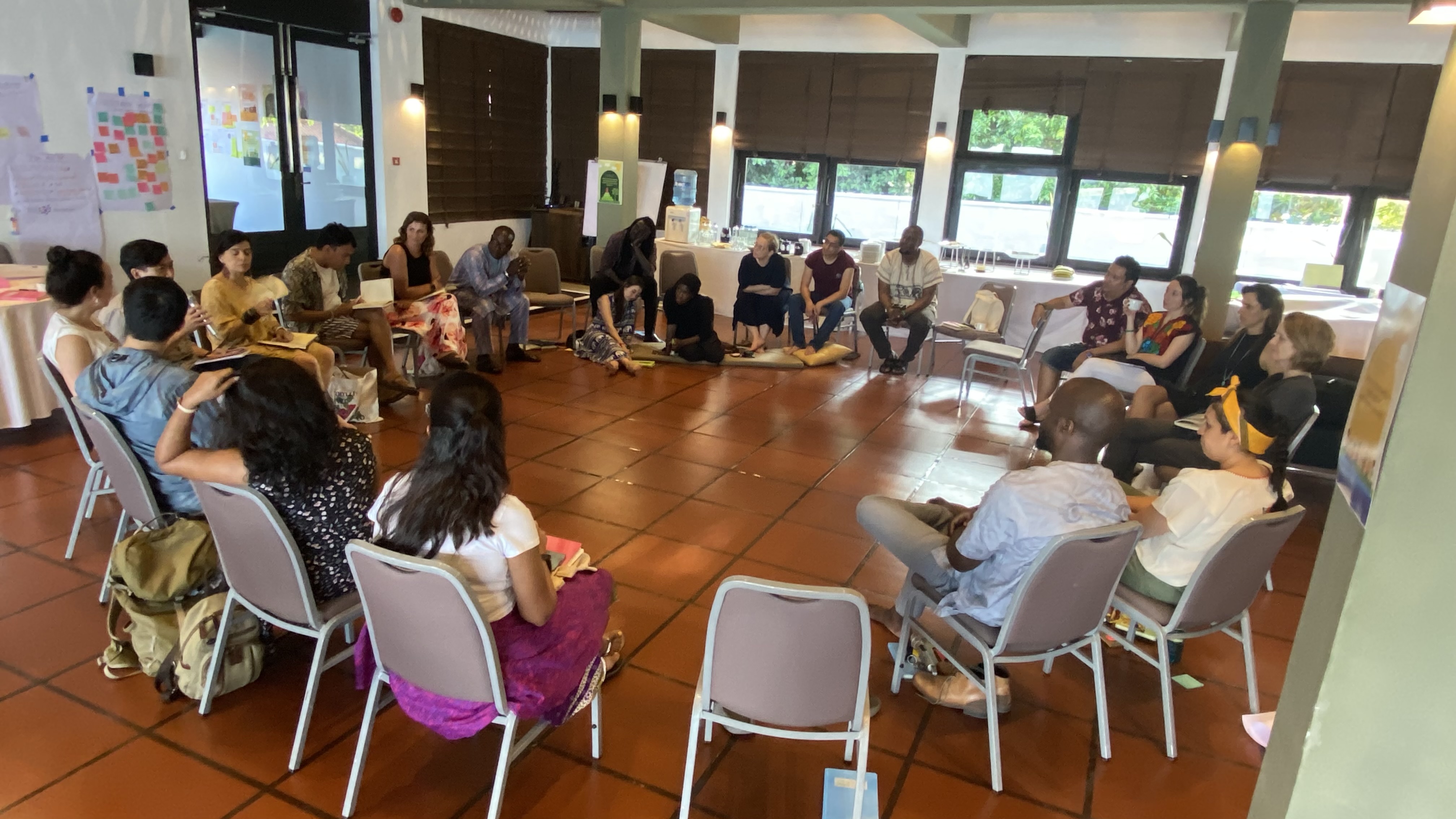
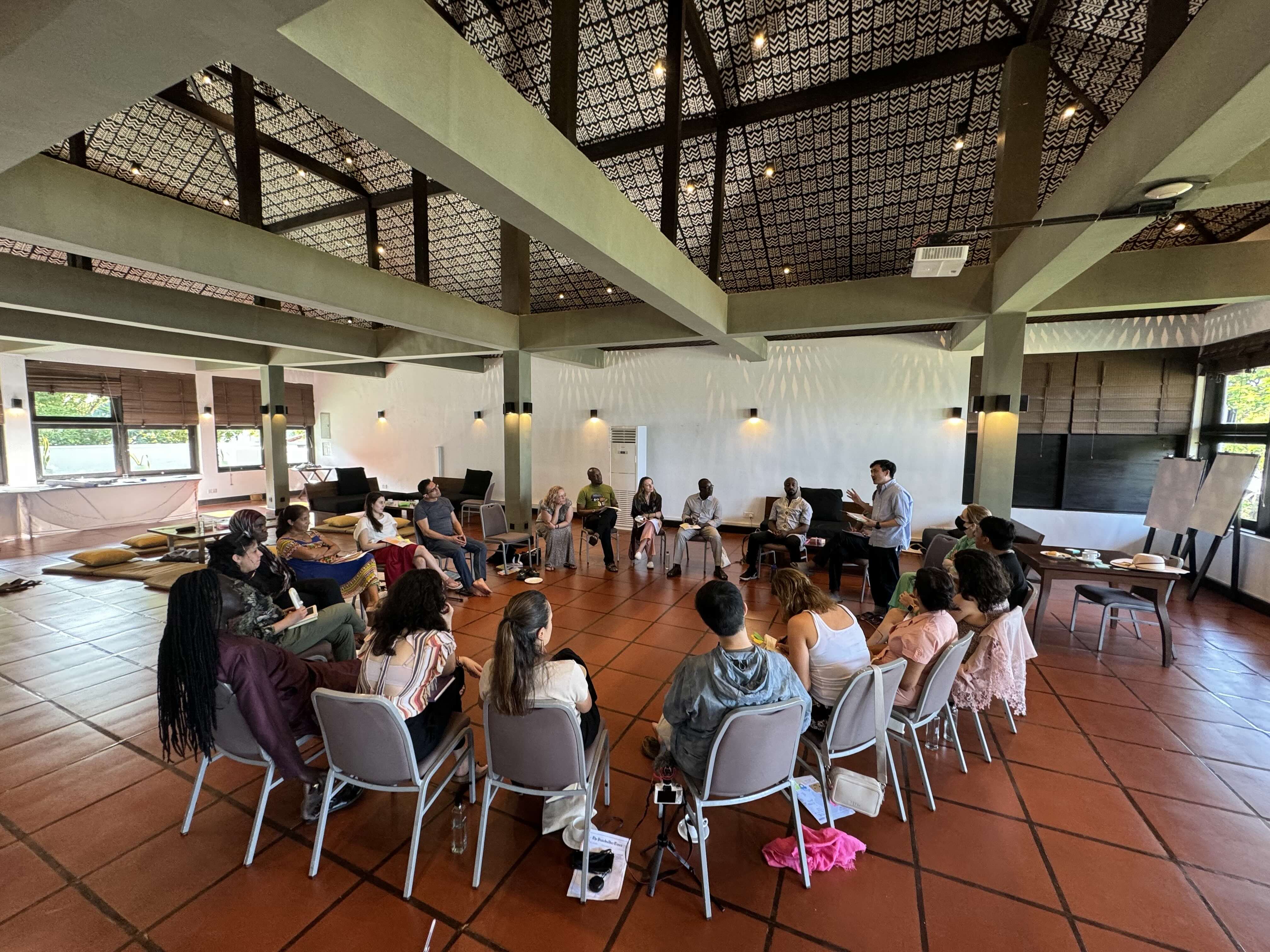
Spending a week withElise, Adriana, DB, Maria Elisa and Vesna — people from completely different cultures and contexts — and feeling closer to them by the end than I feel to some people I've known for years, taught me something that no book has been able to teach me with the same force: transparency is not a policy. It is an act of courage, and it requires company.
The hammam was what Winnicott (1971) calls a holding environment — a place safe enough for something new to emerge. The heat, the marble, the fact that nobody could really hide behind their professional titles in that context. It created the conditions where real conversation could happen. And I think that's the whole point: you can't mandate transparency. You can only create the conditions for it. Then you wait, and you trust.
The image below shows a comic book I did for the Transparency document from Reimagine Peacebuilding (2023)— we all have open areas and closed areas, even with the people we love most. Wanting more transparency in our communities doesn't mean erasing our own boundaries. It means learning to navigate those edges together, with honesty and with tenderness.
Institutional transparency was built on fear. Fear of corruption, fear of abuse, fear of impunity. And yes, that fear is not irrational — we have seen enough cases to know why those mechanisms exist. But a transparency that is born from fear produces cultures of surveillance. It produces people who watch their own backs, not people who take care of each other.
The radical transparency I am talking about comes from a different place. It comes from the genuine desire to be known by the people you work with. From the conviction that honest relationships are more sustainable than perfect ones. From whatFreire (1970) described as love as a political act — the foundation of any pedagogy that actually liberates people, rather than just managing them.
When I think about that hammam — the steam wrapping around all of us equally, regardless of where we come from or what position we hold — I think that's what we need most urgently in our organizations and movements: spaces where human warmth softens what protocol has hardened. Spaces where someone can say “I don't know,” “I made a mistake,” “I need help,” “this is hard for me” — and those words are received not as weakness, but as the kind of courage that holds a community together.
The path from OldPower to New Power is not straight and it's not easy. But there is a compass:the quality of our relationships. Radical transparency is, in the end, a daily commitment to building that quality. A little more each conversation. A little more each time we choose the honest truth over the comfortable silence.
Brown, B. (2010). The gifts of imperfection:Let go of who you think you're supposed to be and embrace who you are. Hazelden Publishing.
Covey, S. M. R., & Merrill, R. R. (2006).The speed of trust: The one thing that changes everything. Free Press.
Freire, P. (1970). Pedagogy of the oppressed.Herder and Herder.
Heimans, J., & Timms, H. (2018). New power:How power works in our hyperconnected world—and how to make it work for you.Doubleday.
Lederach, J. P. (2005). The moral imagination:The art and soul of building peace. Oxford University Press.
Reimagine Peacebuilding. (2023). Space 2:Transparency — Relationship-centric accountability [Internal community document]. Reimagine Peacebuilding.
Rosenberg, M. B. (2003). Nonviolent communication: A language of life. PuddleDancer Press.
Winnicott, D. W. (1971). Playing and reality.Tavistock Publications.