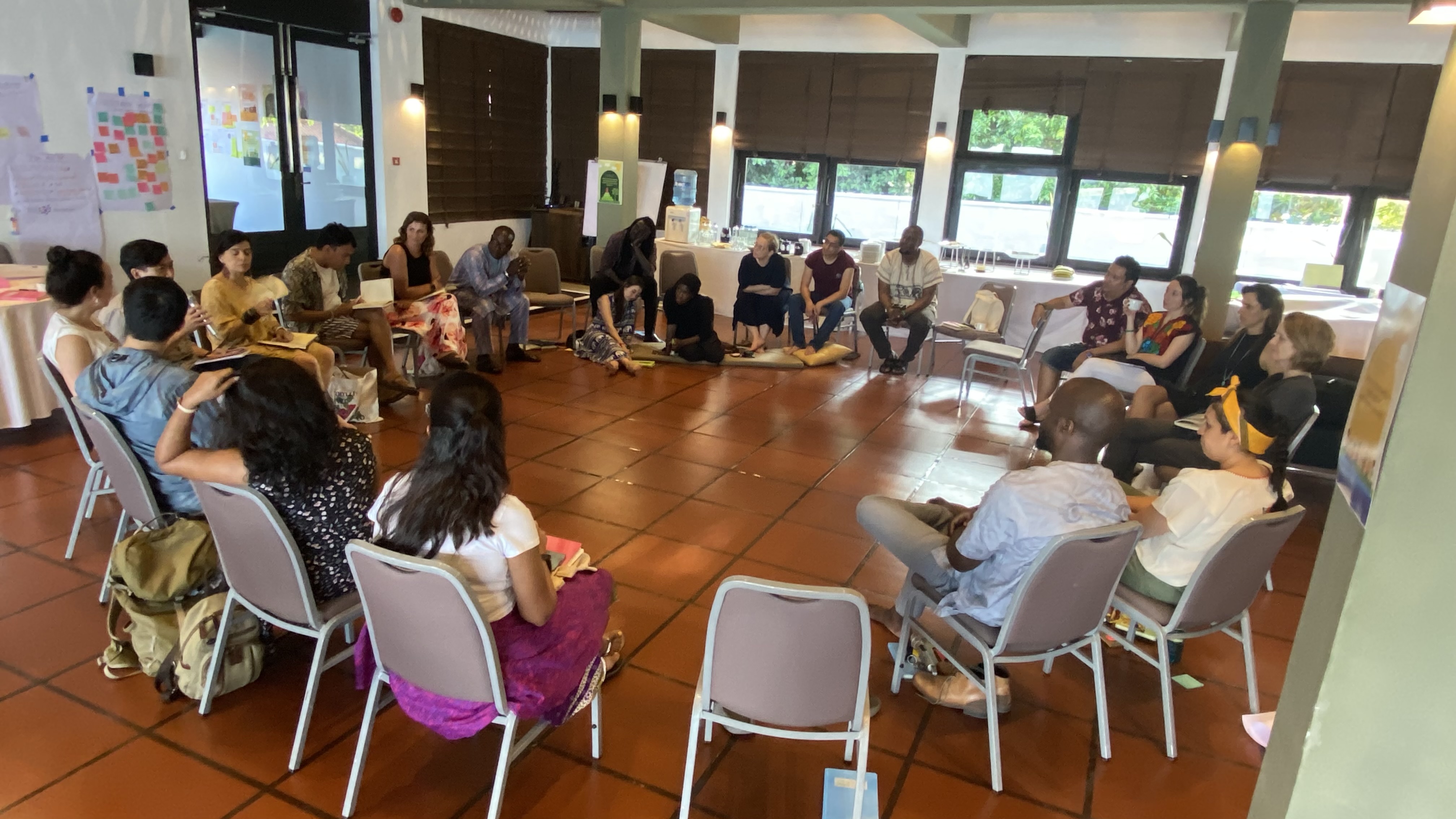
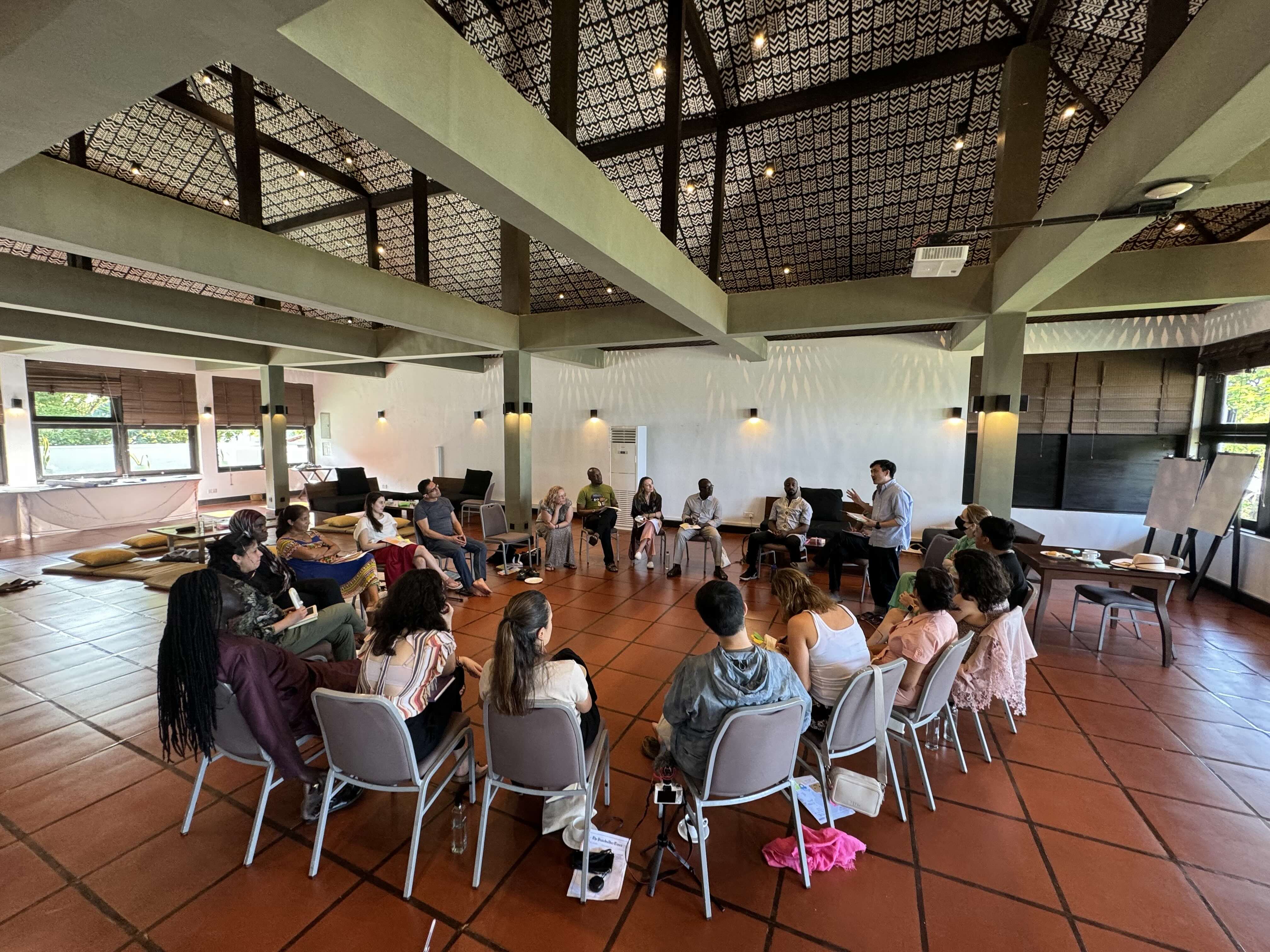
What does peace actually sound like in the way we speak to one another? Drawing on his experience as a South Sudanese activist and member of the Reimagine Peacebuilding Community, Manasseh Mathiang reflects on how language can either reproduce conflict or help create the conditions for trust, relationship and peace.

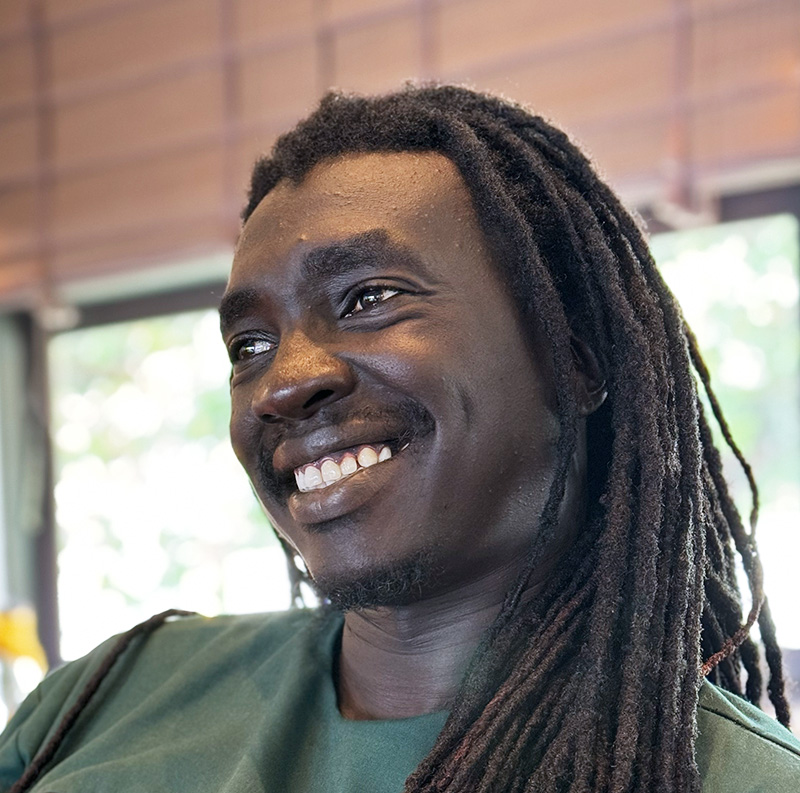


Have you ever wondered whether peace can be catalysed through the promotion of “peaceful language”? This has been a question I have been battling with for the last year or so. This article is inspired by my personal experience in the Reimagine Peacebuilding Community and by how its culture and intentionally cultivated practices have shaped my life and the way I relate to people and communities around me.
I have been in different professional settings and trained in basic skills such as diplomatic etiquette, where we were taught how to navigate official hierarchies and communicate across cultures. Basic counselling protocols taught us the five-stage counselling process, among other things. Lately, however, I have been contemplating how peace can be promoted or sustained in communities affected by conflict through intentional peacebuilding coaching that cultivates practices of peaceful speech.
I come from a war-torn country. South Sudan has endured war for decades, shaping our cultures and behaviours across generations. We have witnessed displacement, loss, broken relationships and communities carrying wounds that are difficult to heal. This has played a role in the unending cycle of conflict. I have often wondered why there is so much aggression in our interactions and communication. I have come to realise that the trauma of living in a constant state of conflict can make toughness and aggression feel like necessary ways of approaching life.
My own journey has been deeply connected to this search for peace and justice. As an activist, I became accustomed to speaking against injustice. When I saw something wrong, I felt compelled to say it. When leaders failed, I wanted to challenge them. Over time, this made me tough, direct and comfortable with strong words. I believed strong realities required strong responses. I was searching for peace, but often through hard talk.
But activism taught me primarily how to speak against things. It did not necessarily teach me how to speak when my objective was to preserve a relationship, create understanding or move people towards a common solution. My involvement in the Tumaini peace process brought this contradiction closer to me. I entered hoping to contribute to peace, yet I observed how easily peace processes can themselves resemble conflict through accusations, blame, suspicion and defensiveness. It made me ask: If we are talking about peace, what should peace actually sound like?
Joining the Reimagine Peacebuilding Community has helped me explore that question. One of the most important lessons I have learned is that a peacebuilder needs to learn how to talk like a peacebuilder. Reimagine has helped me understand that how we speak is itself part of the work. The words we choose can create conditions for peace or reproduce conditions for conflict. This requires courage, care and humility.
Within Reimagine, I encountered phrases that challenged my communication habits: “move at the speed of relationships,” “fumble forward,” “express discomfort,” “name the elephants in the room,” “own our impact,” and “pause for clarity.”
This resonates strongly with Marshall Rosenberg’s work on Nonviolent Communication, which emphasises moving away from judgement and towards human needs. Rosenberg argues that when we express ourselves through evaluations and interpretations, people are likely to hear criticism and respond with self-defence or counterattack. He advocates language that identifies observations, feelings, needs and clear requests.
One of his insights speaks directly to my experience: “The more we use words that in any way imply criticism, the more difficult it is for people to stay connected to the beauty within themselves.” His point is not that we should avoid difficult truths. Rather, we should communicate truth without unnecessarily turning the person we address into an enemy.
I have become conscious of the difference between saying, “I am not in agreement,” and saying, “I have a discomfort.” The first establishes a position against something. The second opens a conversation about my experience. This matters because peacebuilding is fundamentally relational. We cannot build peace by destroying relationships while trying to resolve disagreements.
John Paul Lederach, one of the most influential peacebuilding thinkers, asks how societies can move toward “re-humanization” while living amid fragmentation. For me, this question begins partly with language. Dehumanisation often enters relationships through words long before it enters through actions. If language reduces people to enemies, traitors, fools or obstacles, it becomes harder to imagine a future in which we live together.
Lederach speaks of the “moral imagination”, the capacity to imagine relationships beyond cycles of violence. I increasingly see peaceful language as one expression of that imagination. It allows me to disagree without deciding that the person I disagree with is my enemy.
I have taken these practices beyond Reimagine. I try to say, “I have a discomfort,” rather than immediately declaring disagreement. I pause for clarity, ask questions before making assumptions, separate the person from the issue, and receive criticism as a possible gift.
This has also made me think about organisational speech identity. We often discuss organisational values, but perhaps we should also ask: What does our organisation sound like when things become difficult? How do we speak when there is disagreement? How do we receive criticism? How do leaders respond when challenged? Can people name discomfort without fear? Can people disagree without being treated as enemies?
The language of an organisation eventually becomes part of its culture. A peace organisation can unintentionally reproduce conflict through its language. I remain an activist. I still believe injustice must be confronted and power must be held accountable. But I am learning that strong does not have to mean violent. Young peacebuilders can be taught that they can challenge an idea without attacking the person, name injustice without dehumanising someone, disagree without closing the door, and express anger without making anger their only language.
For me, this is the difference between talking about peace and talking peace. Talking about peace is easy. We can organise conferences, negotiate agreements and deliver speeches. Talking peace is different. It means allowing the values of peace to enter our everyday communication. It means asking whether our words create trust or fear, openness or defensiveness, connection or separation.
South Sudan needs peace agreements, justice, accountability, political reform and responsible leadership. But we also need transformation in how we communicate. We need communities that can disagree without hostility, leaders who can acknowledge their impact, and citizens who can challenge power while listening.
Joining Reimagine has changed how I understand my role. I used to think my responsibility was primarily to advocate for peace. Now I also believe I have a responsibility to promote the language and culture of peace. Peace is not only something we negotiate. Peace is something we practise in our communities and institutions. Sometimes, that practice begins with choosing different words.
Ultimately, I have realised that peace does not require the absence of conflict. Conflict is a normal part of human relationships. What matters is how we respond to it: whether we allow it to escalate into violence or engage it in ways that transform relationships and open the possibility of peace.